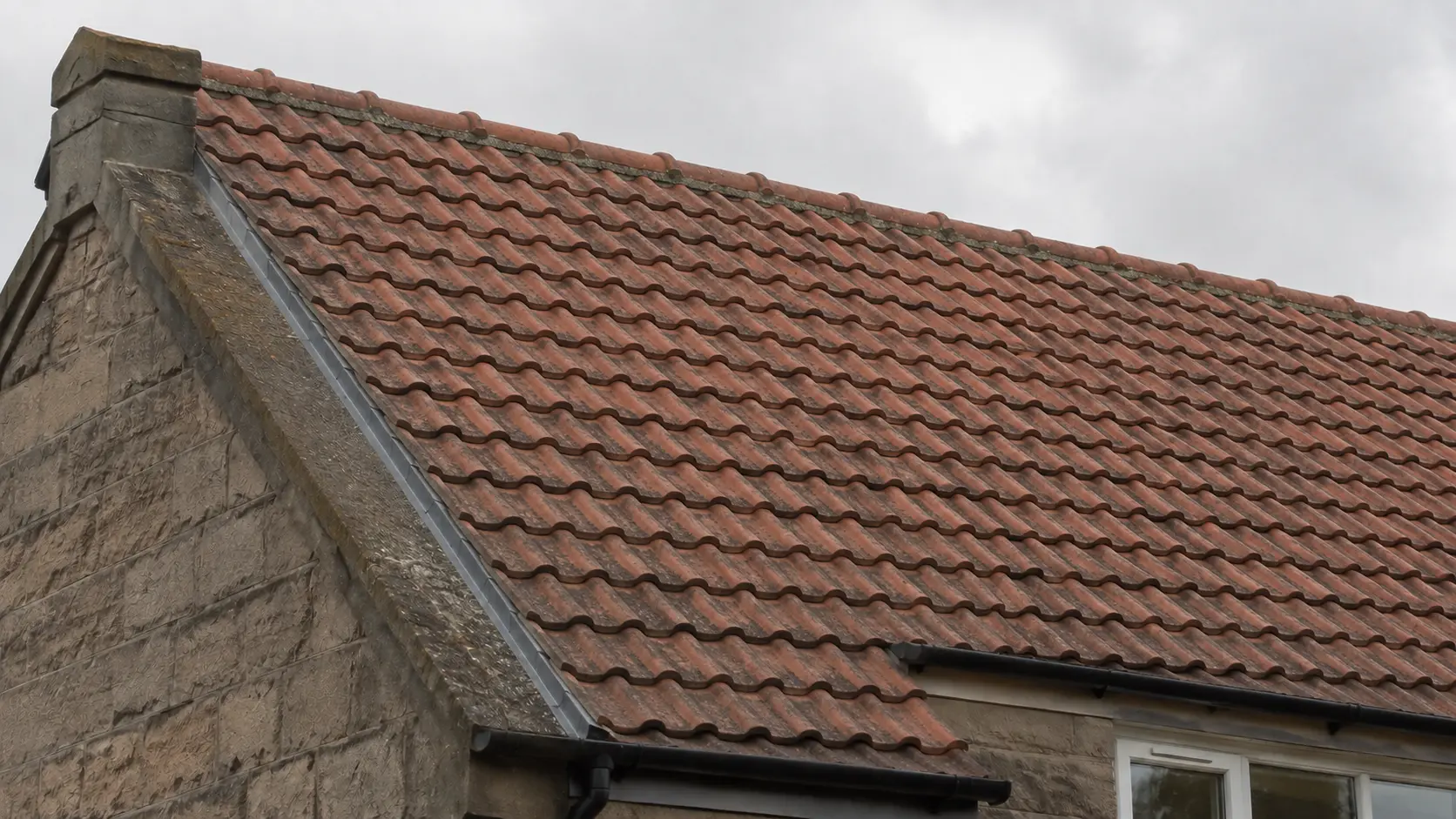
13 years’ roofing experienceSlate, tile and flat roofs
Stirling and nearby areas roofing
Roof Repointing Stirling
Failed mortar at ridges, verges and chimney masonry in Stirling allows water to reach the supporting structure. Tell us where the problem is and we will call out to survey the roof and send a written quotation at no charge.
Fully insured: £5m public liabilityNew roofs from £7,500Free no-obligation quote
0800 055 4334Monday–Sunday, 10am–5pm
Finance from £22 a weekSubject to status. Terms apply.
What you can expect
Fully insuredPeace of mind on every job
Workmanship guaranteeBacked by our guarantee
Free quotesWritten, with the scope set out
Roofing help across Stirling
Straightforward roof repointing in Stirling
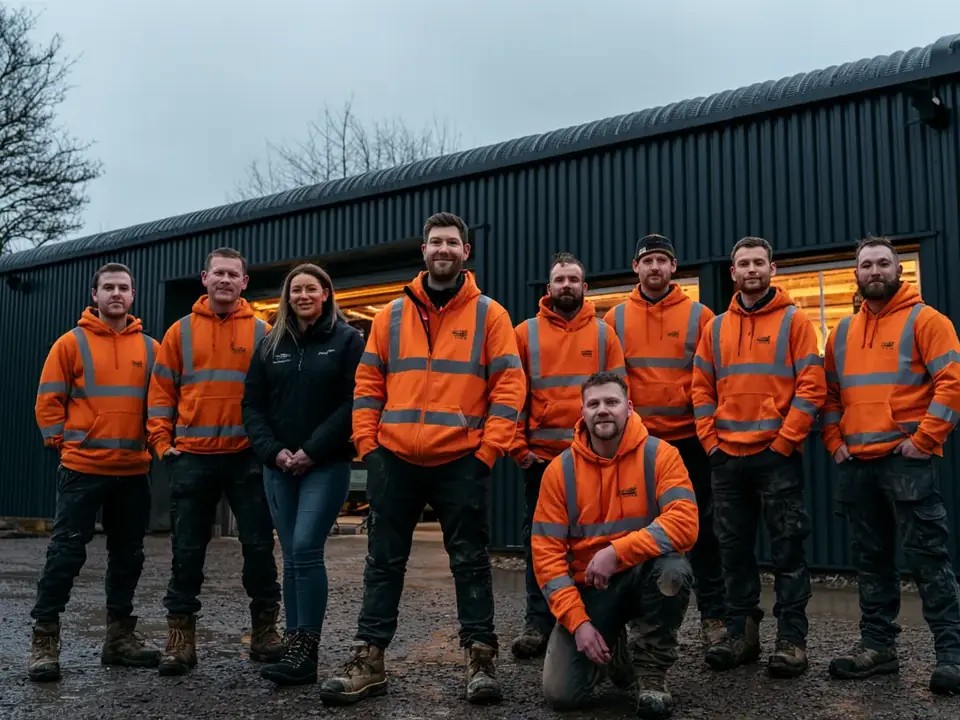
We are Roof Repair Stirling, local specialists in roof repointing for Stirling and the Forth Valley.
Mortar is renewed at ridges, verges, chimney stonework and flaunching, and dry-fix systems are fitted where they are the sounder choice. Other roof jobs we handle are set out on our Stirling roofing homepage.
Why choose us? We know how wind and wet wear mortar on exposed roofs here. We check what the mortar is holding in place, so a fresh patch is not hiding a bigger fault. A clear, honest quote is in your hands before any work starts.
Mortar cracking or falling out? Give us a call today.
Last updated 17 November 2026
Roof pointing
Roof repointing for weathered mortar
Mortar that has cracked or worn does not always need the same fix. At a ridge, a verge or a chimney it does different work, so we begin by looking at what it is holding in place.
The work might be repointing at ridges, verges, chimney stonework or flaunching, or fitting a dry-fix system if that is the sounder choice.
On exposed roofs the slate, tile and lead nearby count as well, since fresh mortar cannot cure movement or leaks that another failed part is causing.
Service overview
Common roof repointing needs
The state of the mortar and the part it supports decide how it should be repaired.
- Ridge and verge mortarMortar that has weathered along a ridge or edge should be judged against the part it serves.
- Chimney stack pointingPointing is examined with the stack and the junction with the roof it sits on.
- Valley edge pointingValleys take plenty of water, so lining and edges are examined together.
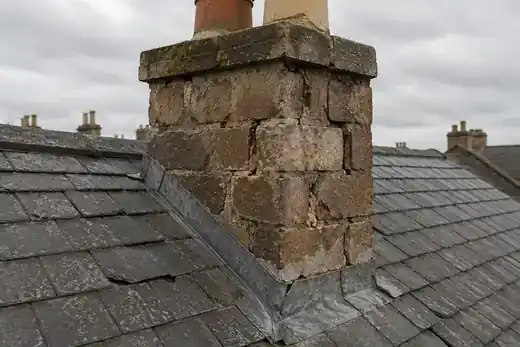
- Cracked or missing mortarOpen joints let weather and movement reach the materials beside them.
- Dry-fix systemsSometimes a dry-fix approach is weighed up instead of new mortar.
Assessment
When a roof needs repointing
Failed mortar is not always a surface matter. The ridge tile, verge, flashing or masonry it holds should be checked before any work is set out.
Repointing is most suitable when the fault really lies in the mortar and the part it supports is fit to be repaired.
- Cracks, erosion or missing mortar.
- Movement in whatever the mortar holds.
- Signs that rain has got to something close by.
Repair options
Mortar versus dry-fix
Fresh mortar and a dry-fix system are quite different. Choosing one depends on the part concerned, how it is, how it was constructed and what must be made firm and watertight.
Our written quotation names the part being treated, not just pointing in general.
- Which roof detail has failed.
- How sound the surrounding materials are.
- Access and how much pointing is needed.
Stirling and the Forth Valley
Roof repointing for Stirling homes
Repeated wetting, drying and frost can loosen exposed roof mortar. New pointing performs best when unsound material is removed and the adjoining slate, tile or masonry remains stable.
Joint length, location, adjoining materials, mortar requirements and roof access determine the scope.
We also check whether loose tiles, damaged slate or failed flashing has helped cause the mortar trouble, so repointing never covers up a different fault.
Questions
Common questions
It means replacing mortar that has failed at suitable details on the roof, like ridges, verges and some chimney work.
Exposure, shifting, age and the state of the neighbouring materials can all lead to mortar failing.
Scope is set by the component, access, how much needs doing, how nearby materials look and whether dry-fix is appropriate.
The parts of the roof concerned, the extent of failure, what the mortar holds up and whether it can be reached safely.
Request a quote
Tell us about the roof
Start by telling us what is happening, where the property is and which service you think matches.