Finance from £22 a weekSubject to status. Terms apply.
What you can expect
13 years’ roofing experienceSlate, tile and flat roofs
Fully insuredPeace of mind on every job
Workmanship guaranteeBacked by our guarantee
Free quotesWritten, with the scope set out
Roofing help across Stirling
Straightforward roof leak repairs in Stirling
We are Roof Repair Stirling, local specialists in roof leak repairs for Stirling and the Forth Valley.
We trace and fix leaks in slate, tiled and flat roofs, wherever the water is getting in: a flashing, valley, chimney, ridge or gutter. Leaks are one part of our wider Stirling roof repair service.
Why choose us? We know how westerly rain coming up the Forth valley finds its way into a roof. We trace the water back to where it really gets in, so the leak does not come back. A clear, honest quote is in your hands before any work starts.
Where the water shows is not always where it gets in.
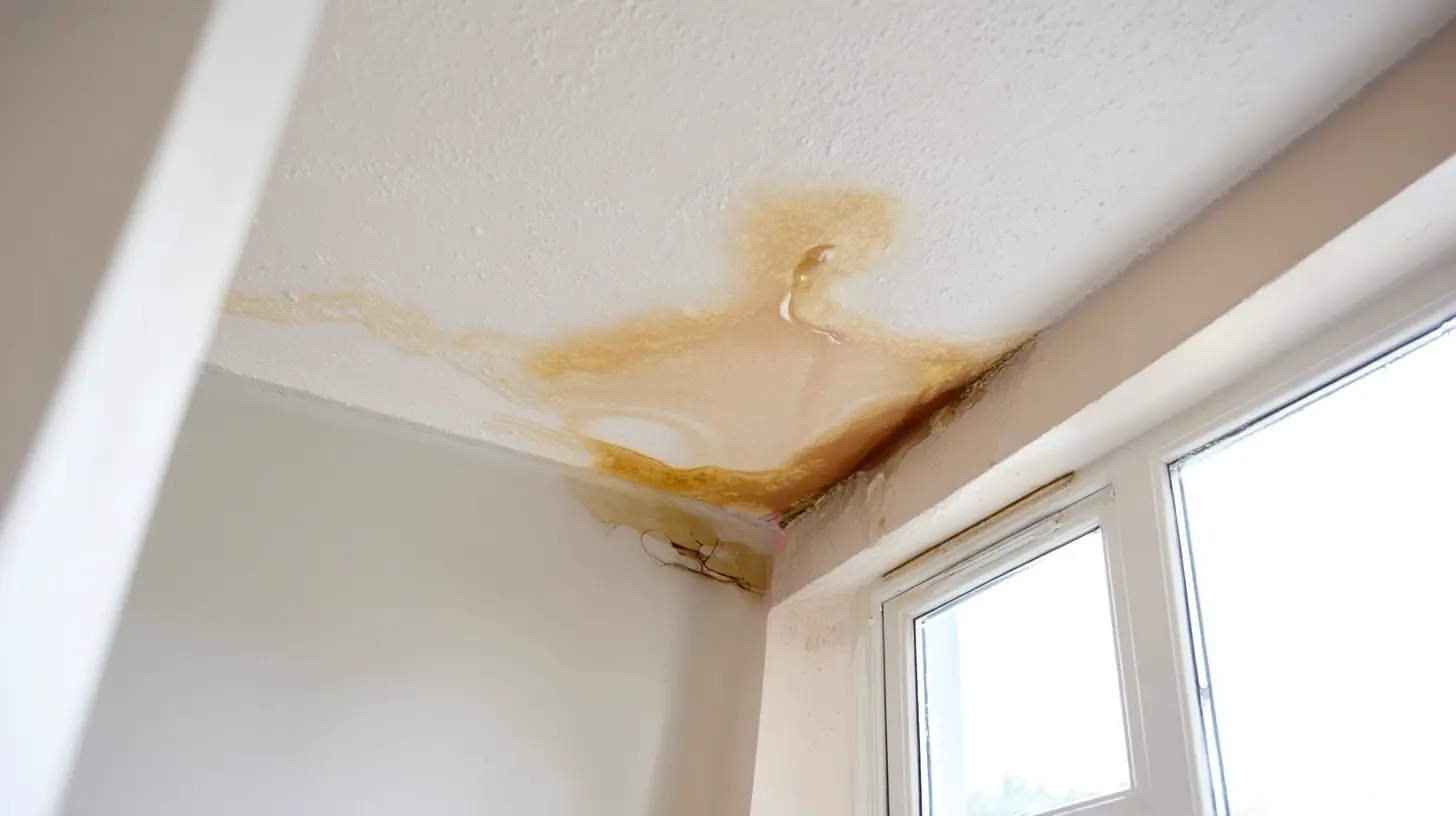
In a Stirling house the first sign of a leak is usually a stain on a ceiling or a damp patch on a wall. By then the water may have run along sarking boards, rafters or the back of a stone wall, well away from the real way in.
We begin with what you can see indoors and work outwards to the roof details most likely to be responsible, checking the covering, the junctions and the drainage in turn.
Westerly rain coming up the Forth valley can push water through gaps that stay dry in calm weather. A leak that only appears in a gale usually points to a flashing, verge or abutment rather than a slipped slate.
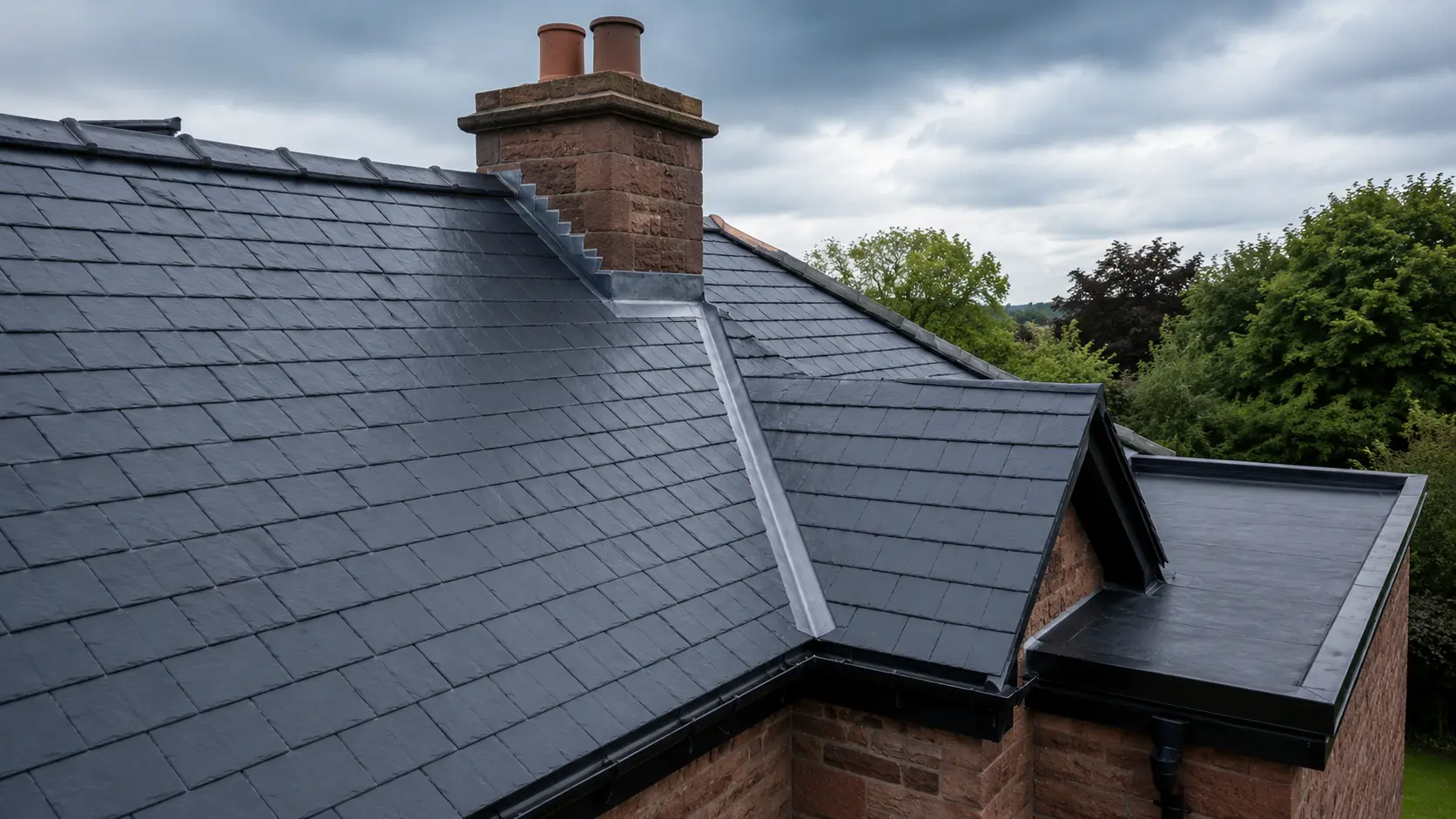
Many older homes in and around Stirling are built of sandstone or whinstone, with grey slate and tall chimney stacks. Matching the repair to those materials matters as much as finding where the water gets in.
Start from the stain indoors and work out to the roof.
Look at the covering, junctions and drainage in turn.
Agree the repair only when the cause is clear.
Possible sources
Common causes of a roof leak
Leaks can start at any of several roof details. Dealt with early, a small gap does not get the chance to wet insulation and timbers, so these are the places we look first.
Possible leak source
Lead flashing and leadwork
Lead dresses the joins between a roof and a chimney, gable or wall. When it lifts, cracks or has been fixed with too little overlap, rain finds a way behind it, so we follow the lead along its full length and check how it is held in place.
What may be checked
Lead that has cracked or lifted at an edge
Crumbling mortar where lead meets stone
Damp that shows up in windy rain
Possible leak source
Roof valleys
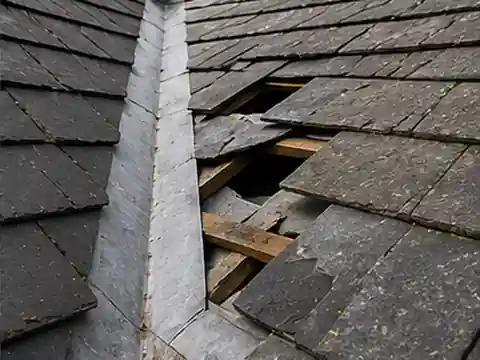
Every valley takes the run-off from two slopes. A thin or split lining, slates cut badly at its edge or a bed of moss and leaves can turn the water aside and into the building, often only during a long wet spell.
What may be checked
Holes or splits in the lining
Moss and leaves choking the channel
Slates beside the valley out of place
Possible leak source
Chimneys
Pointing, flaunching, flashings and stonework all meet at a chimney stack, and trouble in any one of them shows up as damp beside the chimney breast. We look at the whole stack and the roof around it before saying where the water is coming from.
What may be checked
Open or eroded pointing in the stack
Cracked flaunching around the pots
Flashing that has pulled away from the stone
Possible leak source
Slipped slates and damaged tiles
A slate or tile that has slipped, cracked or gone missing breaks the overlap that sheds rain and leaves the felt and battens beneath it exposed. Where that has happened we look at the nails and the neighbouring slates as well as the gap itself.
What may be checked
Slipped, split or missing slates
Cracked or displaced tiles
Slates that keep moving in the same place
Possible leak source
Ridge tiles and failed mortar
On exposed ridges the old bedding mortar can crumble, pieces can crack and gusts can lift them. The gaps this leaves along the top of the roof let rain run straight in, so we check earlier patch repairs and the courses just below the ridge.
What may be checked
Ridge pieces that are loose or cracked
Bedding mortar that has gone
Earlier patching that has come away
Possible leak source
Flat roofs
Flat roofs on extensions and garages stay dry only while the covering is whole and water can drain away. Splits, open joints, worn edges or blocked outlets all let water in, so we look at the surface, the edges and the drainage together.
What may be checked
Blisters, splits or lifting joints
Damaged edges and upstands
Outlets blocked or water left standing
How we investigate
How we find the source of a roof leak
We begin by asking where the water shows indoors, when it happens and whether wind or a long spell of rain makes it worse.
Next we follow the likely routes across the roof covering and its details. The slates directly above a stain can look sound while the real fault sits higher up or to one side.
Once the cause is clear, our written quotation names the detail at fault, the materials involved and the work needed.
Interior signs
Water stains, damp patches and ceiling leaks
Brown or yellow stains, damp patches, bubbling paint, drips in wet weather and a musty smell are the usual signs that water is getting into a house.
Note where and when it shows, though the fault in the roof may be some distance from the mark.
Rainwater often runs along timbers and under the covering before it appears in a room.
Whether stains or drips follow wet weather.
Whether the stain is spreading.
Anything you can see on the roof from the ground, without climbing.
Rooflights, vents and roof space moisture
Leaks around rooflights, vents and a soil pipe
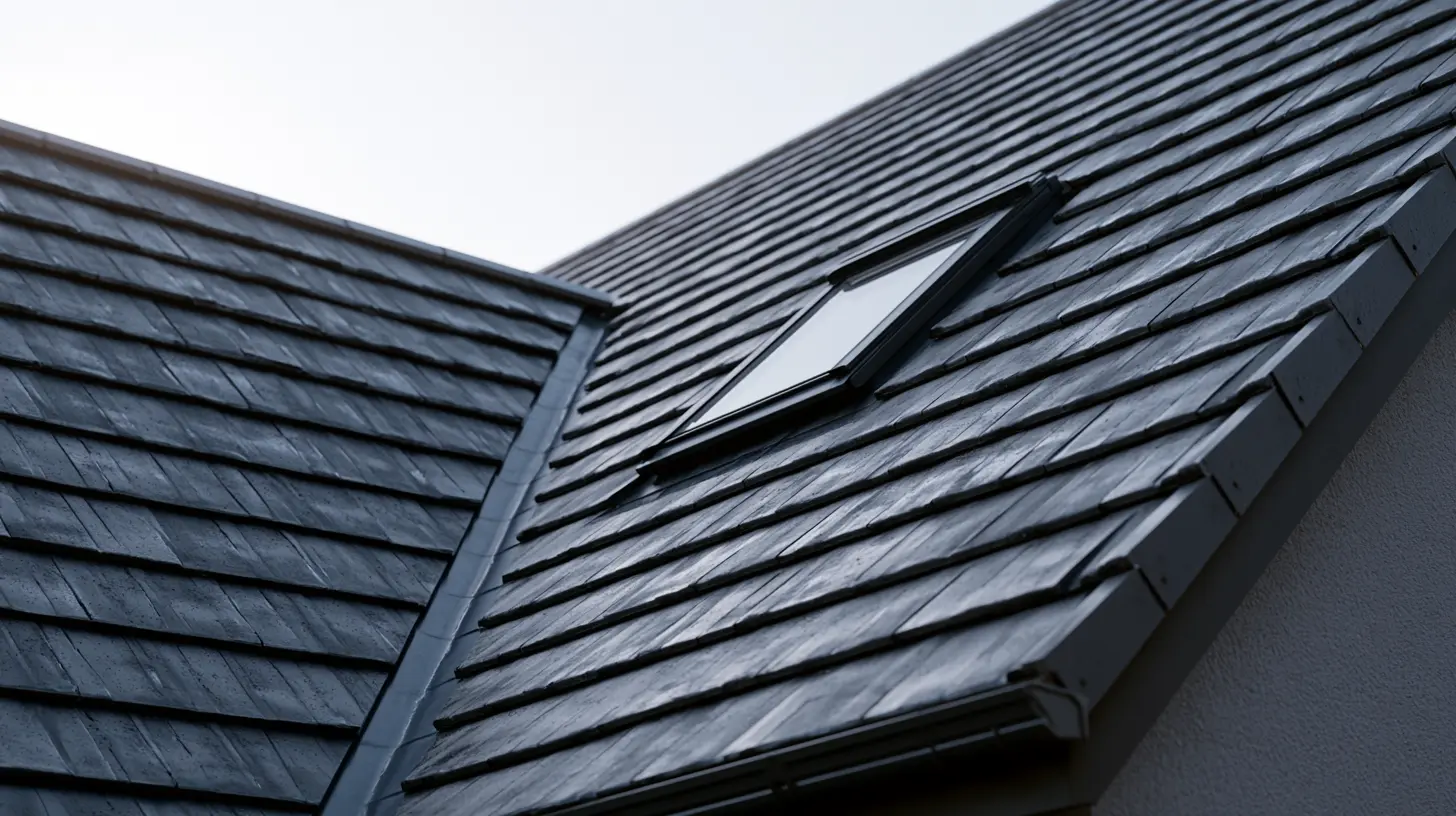
At every rooflight, vent and soil pipe the roof covering is cut through and has to be made watertight again.
The flashings and seals around them must lead rainwater back over the roof surface and keep it out from underneath.
Damp in a loft can also be condensation, not rain.
Condensation tends to go with poor ventilation or humid rooms, while a leak usually shows up after rain or in a particular wind.
Questions
Common questions
Water gets in at slates and tiles, valleys, flashings, chimneys, rooflights, vents or flat roof joints, and it often travels a fair way before it appears indoors.
Do not go onto the roof. If it is safe, shift belongings out of the way, put a container under any drips and make a note of when it happens. Then call us any day of the week and we will arrange an inspection.
The cause, the roof type and materials, any damage hidden underneath and how easily we can get to the roof all affect the written quotation.
Condensation can leave a loft or ceiling damp, yet it behaves differently from rain coming in. Noting when and where it appears helps us tell the two apart.
Request a quote
Tell us about the leak
Tell us where the water shows, what the weather was doing and where the property is.